July 31, 2026
How to Keep Conference Attendees Engaged: 10 Proven Strategies
The Death of the Corporate Broadcast
We’ve all sat through them: endless PowerPoint decks, fluorescent exhibition halls, lukewarm coffee, and slides that look like they were written by ChatGPT three hours earlier. By mid-afternoon, half the audience is checking emails, and the rest are mentally checked out.
The traditional conference playbook—cramming every minute with back-to-back presentations—is officially broken. In a world flooded with automated content, 70% of people say digital marketing oversaturation has made them stop caring what brands say.
To keep attendees engaged, you must stop broadcasting at them and start facilitating genuine human connection, play, and unscripted discovery.
10 Strategies for Real Engagement
1. Implement the “30% Un-Agenda Buffer”
Never over-programme your schedule. Apply The 30% Buffer Rule: strip away nearly a third of your stage presentations and replace them with intentional, un-agenda spaces—extended coffee breaks, informal lounges, and open roundtables. The real ROI of an event happens in the hallways and queues, not while staring at a slide deck.
2. Move from “Brand-as-Star” to “Brand-as-Host”
Attendees don’t travel to a conference to spend three days looking at your logo; they attend to meet their peers. Data shows 49% of Gen Z and Millennials wish brand events felt less curated and more real. Stop trying to be the hero on stage; become the gracious host that creates micro-pockets of belonging for your community.
3. Combat “AI Fatigue” with Human Touches
As AI content floods every digital channel, frictionless content loses its value. In fact, 55% of consumers feel uncomfortable on websites relying heavily on AI content, and up to 50% will wait hours for a human response over an instant bot reply. Double down on what algorithms can’t replicate: unscripted panel debates, candid behind-the-scenes content, and empathetic on-site support teams.
4. Bring Back Tactile, Analogue Experiences
People are fatigued by glass screens and are actively seeking physical reality. Swap out generic digital touchpoints for tactile experiences:
- Instead of PDF downloads via QR codes: Provide beautifully printed event Zines or physical notebooks.
- Instead of generic plastic swag: Hand out locally crafted, customisable mementos.
- Instead of screen polling apps: Set up physical voting boards or interactive installations.
5. Harness Humour and Whimsy
Humour is a uniquely human signal that AI cannot replicate convincingly. Research shows 72% of people would choose a brand that uses humour over one that doesn’t. Hire a comedian MC to keep energy spontaneous, rewrite corporate signage with witty copy, and build unexpected surprise moments into the day.
6. Build Brand “Lore” and World-Building
Your conference shouldn’t stand alone; it should feel like a live chapter in your overarching brand narrative. Tease fragments of your brand story before the event, design hidden spaces where attendees uncover insights on their own terms, and connect your past journey with where your community is going next.
7. Ditch Lectures for Active Formats
If your content could easily be digested via a PDF or webinar summary, attendees have no reason to participate live. Replace mono-directional talks with interactive formats:
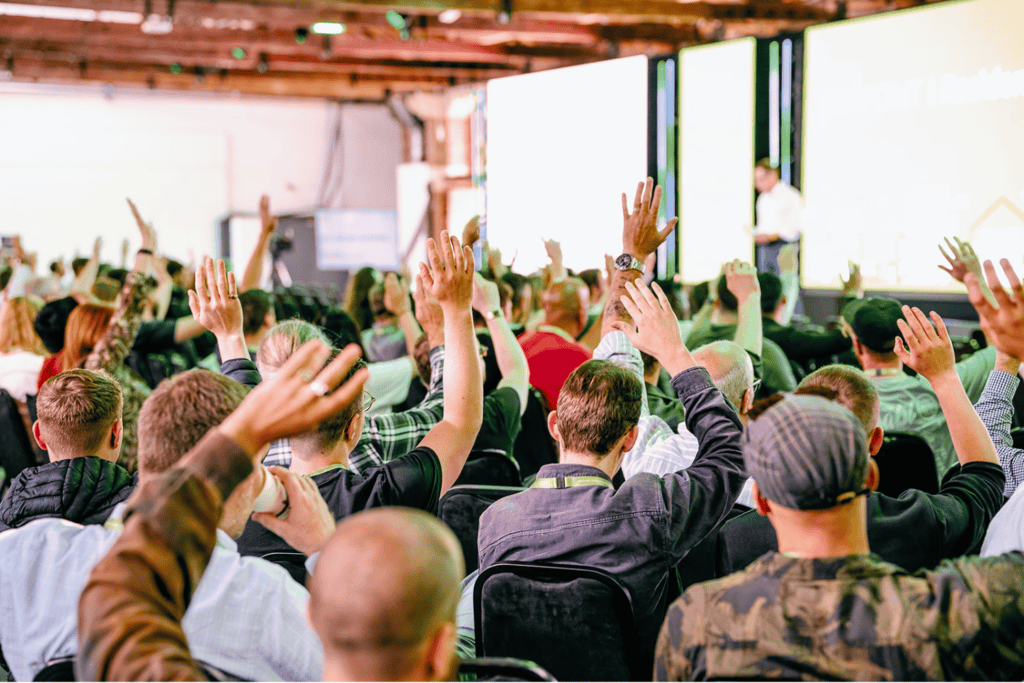
- Fishbowl Debates: Leave an open chair on stage for audience members to step up, speak, and swap out.
- Analogue Workshops: Host hands-on sessions where collaborative problem-solving matters more than a polished deck.
- Live Case Studies: Invite leaders to share real, unsolved business failures and crowdsource solutions from the room.
8. Design for “Exploration Over Optimisation”
In business, every minute is tracked and optimised. Give delegates permission to step into exploration mode. Over 76% of young professionals want more time to be playful at work and events. Offer open-studio drop-in zones, outdoor walking meetings, and quiet, screen-free reset lounges.
9. Offer Live Customisation
Generic, mass-produced experiences drag engagement down. Allow delegates to personalise their journey through customisation bars (hand-stamping or embroidering their own merch), flexible street-food dining instead of rigid plated meals, and tailored agenda tracks.
10. Measure Commercial Impact, Not Vanity Metrics
To secure a budget, stop relying on vanity outputs like footfall or app downloads. Rebuild your dashboard around 4 Commercial Quadrants:
1. Revenue Impact: Pipeline generated, deal acceleration, and direct sales velocity.
2. Brand Impact: Awareness uplift, sentiment shifts, and brand recall.
3. Community Impact: Customer retention rates and peer referrals.
4. Content Impact: Production savings achieved by using the live event as a 12-month content engine.
Quick-Start Event Checklist
- Strip 30% of stage presentations to create unscripted networking time.
- Position messaging around being a Host, not the Star.
- Provide tactile media (printed zines, physical voting) alongside digital screens.
- Brief hosts/MCs for spontaneity and humour.
- Align post-event reporting with the 4 Commercial Quadrants.
Ready to Elevate Your Next Event?
Creating an engaging conference isn’t about buying shinier tech; it’s about building spaces for real human connection.
At First Event, we help global brands create experiences that build community and drive measurable business growth.
Download The Full Human Chapter Report or Contact the First Event Team to start planning your next experience.
Frequently Asked Questions
A: Track dwell time in networking zones, participation in active formats (like Fishbowl debates), use physical interaction boards, and conduct qualitative 1-on-1 micro-interviews during breaks.
A: Digital oversaturation and AI spam have created a trust gap. Attendees travel to live events specifically to escape screens and experience real, human connection.
A: Frame the change using the 4 Commercial Quadrants. Show leaders that sales acceleration and trust are built during unscripted peer discussions, whereas over-programmed agendas lead to delegate fatigu